Template by:
Free Blog Templates

Tampilkan postingan dengan label computer. Tampilkan semua postingan

Rabu, 02 November 2011

Facts: Apple vs PC


As you walk in to your neighborhood coffee shop, a fast glance around will suffice to sum up the various kinds of people inhabiting the place. The hipster along together along with his scarf & laid back attitude, the businessman along together along with his three-piece suit & tie, the mom together along together with her list of tasks to accomplish. Before seeing the actual people, you can probably make a pleasant guess as to what they may look like based on the kind of computer they are using. Our possessions have come to define us in this age - your computer may define who you are.

From a technical standpoint, Apple is a few steps behind the top PC's. Every release of a used MacBook pro hardware set is preceded by high-end PC laptops with the same expertise. When the i7 processor was released about a year ago, PC's had the latest processing unit several months before Apple integrated it in to their systems. Why then do people prefer Apple to PC on such a large scale? After all, Apple passed up Dell, Hp, & Toshiba long ago & at point this year they were the largest company in the world.

To start with, Apple takes the cake on aesthetics. The unmistakable look of the silver MacBook Pro with its flush liquid crystal video display & backlit keyboard is hard to replicate. This design is not, it is also sturdy. Apple makes its laptops out of all aluminum, making them much more long lasting the mostly plastic-based PC laptops. In a drop check, Apple with outperform PC nine times out of0.

Secondly, Apple has done a great job of ensuring their designs are perfected internally before releasing them. They may not release a used model every month, but when they do release the next generation, it is near flawless at its core. This is due to Apple's meticulous testing strategies that be positive a tiny number of defects. Common issues that do plague both Apple & PC such as overheating, graphics card failure, & hard drive failure, appear to not affect new MacBook Pros as much as new PCs.

Thirdly, Apple has effectively captured the marketplace for "cool" expertise. When IBM was founded in the mid 1900's their aim was to produce computers that were functional & made work flow more productive - not look chilled. When Dell, HP, Toshiba, Sony, & other PC brands joined the race, they took this same approach, each brand generating some kind of niche, all under the larger umbrella of IBM's philosophy of functionality.

When Steve Jobs took over Apple in 1997 after a hiatus from the company, his focus was on being user friendly by using eye sweet. Every detail of an Apple computer, down to the font used in its coding is meticulously reviewed for effective looks. The idea worked, & Apple is confidently the only widely accepted "cool" computer.

Whether you’re a mom, a businessman, or a hipster, them remains true - Apple computers make you chilled. They may not have the latest innovative expertise or be functionally any different from your everyday PC, but the panache they carryover makes them a product sought after by all.

Rabu, 26 Oktober 2011

Beginner Tips: Build Your Custom PC (Last Part)


Last part of the article, previous part can be seen here.

The next step is to unpack the motherboard & install the MOUNTING SCREW HOLDERS in the case. Usually, these are golden pegs that you will place in the case to support the motherboard. Your machine won't power up later you do not follow this step! Correspond the screw holders to the holes on the motherboard where the screws will go. When your screw holders are all in place, remove the rear connector panel that comes with the case & replace it with the specific to your motherboard. Slide the motherboard in to place through the rear panel & on top of the screw holders & screw the motherboard to the case.


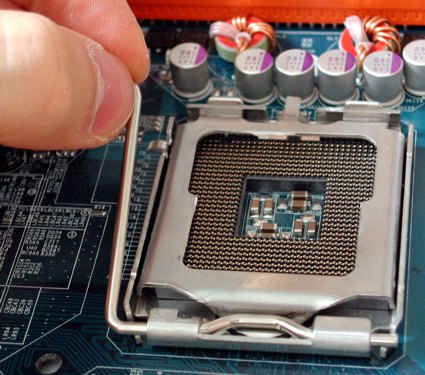
Remove the processor slot cover & unlock the slot by moving the lever. Open your CPU & follow the instructions provided to put in the processor & the fan that came with it. When your processor is properly seated & locked, you ought to add a layer of thermal paste between the processor & the fan. Chair the fan & lock it in place according to the instructions & connect the power cable to the motherboard (there will only be slot where it can fit).

Unpack your DVD drive & your hard drive & slide them in to place. It is feasible for you to screw the drives in place through the side of the mounting brackets. When the drives are installed, proceed to place the RAM sticks in to their slots. They only fit way & inserting them will cause the latches at either finish to lock the RAM in place automatically.


Take SATA cables & connect each to each drive & to the motherboard. Now, connect the power supply to the motherboard in spots: find the rail with the 2x2 connector & plug that in to the appropriate 2x2 slot on the motherboard. Then, take the 2x12 Rail & plug it in to the appropriate spot on the motherboard. Find SATA rails & connect them to both drives. Finally, open the motherboard instruction manual & find out where the front panel connectors are. This is where you will connect the narrow cables that are coming from the front of the case. They control the power & reset buttons as well as the lights on the front of the computer case.

By the time all is said & done, connect any case fans to the appropriate power supply rails & then replace the computer's side panel & screw it in place. Plug the computer in to the wall socket & connect your screen, mouse & keyboard. Say a speedy prayer & press the power button. If all of your parts work & you followed these instructions correctly, your machine will now be powering up! Visit the bios to configure basic process settings & then insert your operating process CD in to the DVD drive & proceed to put in the OS of your choice.

Despite the length of these instructions, building your own computer can be a speedy affair. It takes an experience computer builder about 30 minutes to go from a bunch of boxes filled with parts to a newly built custom desktop computer. Don't let the mass of wires intimidate you. They only slot in spot & time you figure out what goes where, you will be comfortable working together along together with your new computer.

Keep in mind that building your own computer means that you are in charge of maintaining the machine. The parts you bought will have individual warranties so keep your receipts & keep their packaging. In the event you have any issues or questions, visit an online computer repair community to get help troubleshooting your issues.

Selasa, 25 Oktober 2011

Beginner Tips: Build Your Custom PC: Part 2


This article is the  continual of Part 1: Begginer Tips: Build Your Custom PC

The number of SATA connectors will limit how lots of drives can be installed inside the computer. Usually, the number will suffice for most users. The number of PCI slots depends entirely on whether you plan to make use of them or in the event you will even need them. Plan slot for each type of card you will add. Finally, think about how many USB slots will be built in & whether that is for all of your devices (mouse, keyboard, printer, camera, microphone, mobile phone...)


Most basic users can receive a motherboard with an on-board video card. This will be for basic computer use & viewing of most videos. However, in the event you are planning to make video intensive use of your computer such as playing 3d video games or editing movies or pics, then you will certainly need a standalone video card instead of an on-board card. Video card (GPU) benchmarks are available in the same fashion as CPU benchmarks.

Your drive choices will be simple. Grab a SATA (connection type) DVD burner & a hard drive that suits your size & speed needs. Usually, you will need a 7200RPM (rotation per minute) hard drive or better & as much space in gigabytes as you anticipate using. In the event you have lots of pics or video, upgrade to a 500GB or higher hard drive. When that drive fills up, you can easily add a second internal drive or expand the computer with an external USB hard drive.

Your largest consideration when choosing the computer case will be aesthetic. Discover a case that you think looks nice & has a solid build quality(with good reviews) & add it to your cart. The last hardware item will be the power supply unit. While some cases come with, most do not. You will need an appropriate wattage to support your machine (300+ for basic machines, 500+ for high performance machines). Additionally, you will need connectors (RAILS) to power all of your devices. At the least, you will need SATA power cables for each drive).

To be safe, add an order of thermal paste/thermal compound for your CPU.

When you have received all of your parts, it is time to start. The first step to assembling your new computer is to open the case & lay it down on your work bench. This is done by removing the large screws on the back that hold the side panel in place. You can ignore the side panel until you are done assembling the machine. In the event you ordered a case without a power supply unit, go ahead & unpack your PSU & place it in the case & use the screws to hold it in place.

To be continued, stay tuned....

Senin, 24 Oktober 2011

Beginner Tips: Build Your Custom PC (part 1)

Building your own custom desktop computer is a task that even a non-tech savvy person can accomplish. It is not as scary as it sounds as long as you follow the steps & ask questions when you need to. The advantage of making your own computer is that you get to pick everything. From how the case looks to what video card to include & what your budget is, you are in complete control. This is a great opportunity for both advanced computer users looking to build a monstrous gaming computer and the basic office user that wishes to save a few dollars.

Every person including you will need either one of these, from students, office workers, and enthusiast gamers!

The first step is to do your research & order your parts. Here are the relevant parts for a basic computer build:

- Optical Drive/DVD drive
- Hard drive
- Case
- Power Supply (PSU)
- Processor (CPU)
- Motherboard
- RAM (Memory)
- Operating Process

These are the core parts of a computer. However, you can fundamentally add to the core by purchasing additional parts like a video card or a wireless net card. As a base, that is all you will need.

I recommend beginning by choosing a processor. The processor is fundamentally the engine of the computer & will select what kind of motherboard you will purchase. For example, in case you are purchasing an Intel E8400 Wolfdale processor, you will need to buy a motherboard with a LGA 775 slot to accommodate the processor. You can visit cpubenchmark.net to see a performance & cost per performance rating for today's processors. Usually, you cannot compare the speed rating of CPUs. That means that because processor boasts 3.2 GHz, that doesn't necessarily mean that it is faster than another processor clocked at 2.9 GHz.

When your CPU is chosen, it is time to pick a motherboard. You need to be mindful of the following compatibilities:

- CPU socket type.
- Number & type of RAM slots
- Number of SATA Connectors for each hard drive & optical drive you will plug in. Leave room for expansion!).
- Number of PCI slots for additional cards (USB cards, modems, wireless network cards, HUBs...)
- Number of USB ports built in.
- Presence of on-board video card.

The CPU socket type is determined by the type of processor you buy. As of this writing, you will be purchasing the DDR3 RAM. You will get at least RAM slots but can upgrade to or more in case you anticipate needing that lots of. RAM sticks offer different capacities so you can mix & match. For example, you can purchase stick of 4GB or purchase sticks of 2GB to reach a total of 4GB of RAM.

The next part can be seen here.

Jumat, 21 Oktober 2011

To Upgrade Or Not To Upgrade...?

The decision whether to upgrade a computer or to buy a brand spanking new is something that all computer users finally face. Answering this query depends on lots of factors. For some users, a simple memory upgrade is, while other users require a newer model to meet their needs.

One major factor in determining whether to upgrade or to buy a brand spanking new computer is cost. Some PC's can benefit greatly from a comparatively cheap upgrade while for others; the cost of updating would be the same as that of buying a brand new computer outright.

Age is also an important factor to think about. As know-how improves, older machines are fundamentally unable to meet the demands of the latest application. No reasonable amount of updating can make a computer that runs Windows XP operate like a state of the art PC walking the latest operating method. While this is true, some PC users don't require the most modern features. Walking a few simple applications doesn't require a brand spanking new machine to do so.

For PC users whose machines are over a few years old, purchasing a brand spanking new computer may be better than updating. This is true for users walking the latest, & most technologically intensive, applications. Modern applications require modern hardware, simple techniques like registry tweaks & application upgrades will have tiny effect on machines that are past their prime.

 A thing to keep in mind about updating a computer is that technology only lasts for not so long. While upgrades can extend the life of a PC, there comes a point when no amount of updating will produce positive effects. Another important fact about updating is that computers have technological limits; it is not feasible to continuing adding upgrades indefinitely.

Purchasing a brand spanking new computer is often a fascinating option for users. Faster machines with more memory & flashy application are stunning. When purchasing a brand spanking new computer it is important to understand that a variety of the features & programs available on older computers may not yet work on newer ones. It is up to the buyer to do their homework before making a purchase.

Thinking about needs, the age of current hardware & budget, it is usually simple to pick whether to upgrade a PC, or to buy a brand spanking new outright. Each choice has its own advantages & disadvantages but fortunately, making the choice is not usually a difficult.

Senin, 17 Oktober 2011

General Tidbits For Buying A Gaming Computer


When looking to buy a gaming computer for your gaming needs, there are thousands of choices to choose. Most of the time, they will blow every computers around out of the water. However, knowing what components you need for gaming computer allows you to ignore the marketing hype and nonsense and find the right gaming computer configuration at the right price.

Whether you opt to shop for a pre-assembled computer or buy components individually and assemble your own personal gaming powerhouse, the necessary parts stay similar. whereas it used to be all concerning processors, speeds have increased to the purpose that any processor created within the previous few years can provide over enough performance for many games when let alone correct parts. For many games, a dual-core processor with a clock speed around 2.4 GHz can suit most gaming needs. Compare costs but, as a four, six or eight-core processor will give enhancements if the value is correct. Whereas a faster processor might increase gaming performance slightly, they're the foremost expensive thanks to increase performance. These days, the necessary factors when selecting a gaming computer are a correct graphics card and adequate RAM to permit snappy computer response.

With the cheap value of RAM, it's usually one in every of the most cost effective components to splurge on for a few added multitasking performance. Whereas the advantages of RAM in gaming are often restricted on the upper-end of the size, further RAM can give fast response times when doing different tasks on your computer whereas gaming. As a vacant minimum, 2GB of RAM might suffice. However, it's advised to induce 4GB of RAM. For added performance boosts, upgrading to 6GB or additional of RAM can enable space to grow and provides noticeable results.

The true workhorse of the gaming computer is that the graphics adapter or video card. These devices handle the show of any video or graphics, create a colossal distinction in video quality and improve frame rates. Select a computer with an infatuated graphics adapter for the simplest performance. Whereas on-board video processors have improved, they can’t match the raw video processing power that dedicated cards can harness. When selecting a video card, compare processing cores, most resolution, out there memory, and memory and processor speeds. An excellent resource for comparing video card performance is often found at Video Card Benchmarks.

Rabu, 28 September 2011

Printers for Laptops Are Awesome


Many people enjoy the convenience of having a laptop computer. There is a lot of hot spots in public places, making it simple to get online virtually anywhere. For students & busy workers similar, the only thing that is a continuing bother has to print while on the go. There are printers for laptops that make mobile printing simple.

Printers for laptops have a great effect on non-traditional work spaces. They offer security when printing sensitive documents such as contracts & copyrighted materials. Printers for laptops can communicate wirelessly through Bluetooth expertise.

Printers for laptops are also great for students. They are smaller than traditional printers & slot in to tiny places. Because they can be used without additional wires, students can place the printers a tiny further away from their laptops & print wirelessly. In cramped dorm rooms & tiny workplaces, a tiny printer is a treasure to have.

Laptop computer printer’s users also have the choice of operating on a power cord or battery. For users that have a dedicated but tiny workspace, the power cord is a great feature. The printer can still communicate wirelessly. The power source is steady & there is tiny chance of an immense printing job being interrupted due to a lack of power.

For users on the go, printers for laptops also come with a rechargeable battery. These batteries are added bonuses for some buyers & an added expense for others. They normally start to charge whenever the printer is plugged in. The charge normally holds for hours, depending on how much printing needs to be completed. Mobile printers are convenient for on the spot meetings & late nights at a coffee house visits to write a paper.

Laptop computer printers can use more ink than traditional printers. If the users print a lot, the ink will run out quickly. The printer cartridges are smaller than traditional cartridges so they do tend to hold less ink. The cost of owning a laptop computer printer is not over owning a traditional printer. For savvy printers, there are methods to economize on ink & ink cartridges.

Before laptop computer owners go out to buy printers, they ought to think about the use of the printer. For users that will print lots of pics, a color inkjet printer would be best. For students that will be printing more text than picks, a laser printer will produce crisp copies in a tiny amount of time. The most popular printer is multifunction printer because it allows a user to complete multiple tasks from location, fast.

Printers for laptops are great to have. Regardless to what type of documents people need, it can be completed from the printer. For on the go users, they have the satisfaction of printing no matter where they are. College students can write a paper in their dorm or their favorite coffee house & print on demand.

Introduction to PCB Assembly

Some of you might have heard of the term PCB Assembly & thought, "What's that"?

This editorial is meant to shed some light on the subject.

The whole process of manufacturing electronic devices is a long & complicated.
The beginning point for all electronics is in the material - Silicon or any other semiconductor.
Through lots of long & pricey tidy room processes, these "wafers" are transformed in to "smart" electronic microprocessors & chips.

These chips cannot do anything by themselves, & need to be integrated onto a printed circuit board (PCB) in order to be able to do something in the finish (like operate your computer or phone).

Now, there is a immense number of companies that design these chips & sell end-products. However, these companies cannot afford to buy all the equipment necessary to assemble their chips onto PCBs in order to devise their end-product.

This is what PCB Assembly companies are for. These (EMS) companies have lots of Surface Mount Assembly lines, & offer PCB Assembly services to other companies who are not interested in doing this themselves.

The PCB Assembly process consists of lots of different processes:

Solder Paste Printing - In the work of this process the preliminary solder paste is printed onto the PCB using a stencil. This is fundamentally the binding material of the devices to the PCB.

SMT Pick & Place Assembly - This is the heart of each PCB Assembly line. This process takes all the individual chips & exactly places them on their designated place on the PCB.

Reflow/Through-hole curing - After placing the chips onto the solder paste, the boards go through a conveyor oven to melt the solder & bind the chips to the PCB.

Conformal Coating - Some boards need a protective lacquer coating. Conformal "Selective Coating" machines quickly & exactly provide a layer of protective coating on the PCBs.

AOI & AXI - Automatic Optical Inspection & Automated X-ray Inspection. These processes are key to confirming that no mistakes have been made in the work of the assembly process

Reworking if needed - If any mistakes or defects are found, some devices can be reworked. Reworking consists of heating the board or tool, & removing it from the PCB so that a replacement can be placed in its stead.

Senin, 26 September 2011

Choosing The Right Web Hosing Service For Your Needs


Due to the fact that the World Wide Web has become the most powerful gizmo known to man today, there is so plenty of comparatively new terms related to the net that individuals who are new to this world have an actual issue with understanding all of them. For example, 20 years ago it was not important at all in the event you could even turn on a computer, & today every modern man or woman fundamentally has to know how to open an electronic mail account, how to browse the net or how to download a file from the net. However, knowing everything there is to know about hosting service & about how a service like these functions still has not become as important as it will soon.

What Is a Web Hosting Service?

There are a lot of sites which offer definitions of the hosting service, but few of these sites can help someone who has never heard of the term hosting service before in their life. Namely, in the event you build a web-site of your own & require as plenty of people as feasible to see it, you must put the net site on the net. This is completed by uploading your web-site to a server. The server is fundamentally a computer, which is giant & powerful, as well as connected to the net round the clock, 7 days a week. By uploading your web-site to the server, you fundamentally buy or rent a section of the server in query, & this little section is run by the hosting service company you pick to go for. Now, they are the ones who are responsible for keeping your web-site online & for showing it because of searches made by web users.

Web Hosting Service Companies & Their Rates

There is a few different types of hosting available to you, & you ought to pick of these according to what you require - a free hosting service is available only to individuals who require to set up a little, personal web-site with no intentions of selling or promotion anything. However, a more serious web-site will always require of you to pay a hosting service company to run it. Now, it is important to understand that nothing in life comes at no cost, & neither does hosting. Therefore, it is always a pleasant suggestion to be realistic & invest some money in to your web-site right away, in order to make it a success later on.

Additional Expenses & Hidden Fees

However, there are some things you ought to pay attention to when it comes to hosting service companies & their rates. This means that there are a lot of these companies that will try to trick you in to believing that their services are cheap or even free, while hiding plenty of additional fees & costs from you in the beginning of our cooperation. A substantial number of these hidden costs include setup fees of any kind, electronic mail & web forwarding, comprehensive web-site statistics, knowledge backup & so on. If there are indeed any additional fees, the company ought to make you aware of them right at the beginning of your cooperation. In lieu, a substantial number of these companies tend to attract customers by offering free stuff or different discounts to them. If there is any mention of things like these, you are strongly advised to steer clear from the hosting service company in query & try to find an honest & reliable company - a company which will give you great value for your money. This means that you ought to always be prepared to pay for the services offered by the company, but simultaneously ask for high quality services to be delivered by the company you hired.

Minggu, 25 September 2011

Choosing a Best Value Laptop


We have seen a quick increase in demand of laptops computers these days, because these mobile device's make One's everyday tasks simpler & a lot faster than before. With a transportable & a handy computer you can do your everyday tasks where ever you are whether you are travelling or you are waiting for bus at bus station you can fundamentally complete your tasks. It is a great revolutionary tool for businessmen, Students & carrier people.

Following are plenty of the reasons why most people prefer a laptop computer over a desktop for computing purposes

  •  Less power consumption.
  •  Handy tool, you can carryover it where ever you go.
  •  Small size.
  •  It provides you facility to work from anywhere and anytime.
  •  Makes interaction with others simple due to its connectivity using Wi-Fi
  •  LAN Port makes it simpler to connect with Net without any additional hardware.
  •  It makes simple to connectivity with other transportable devices simple.


Because of high competition in the market, most of computer manufacturers dropped prices of their products. Plenty of types of laptops with best performance are being launched with best prices. This competition gives advantage to buyers to buy laptop computer of their choice which suites their needs at affordable & cheap rates.

To make positive you buy a lovely laptop computer according to your needs, always check the type of application, battery life of laptop computer & also think about its size, warrantee period & other features according to your needs. So you ought to always know what model you are going to buy & you ought to always do proper analysis of your needs & requirements before making a purchase.

You ought to also think about Size & battery life of the laptops also according to your need, For example in case you are a student you ought to buy a laptop computer which is simple to carryover, so when you go to your college or school you can carryover it fundamentally. & in case you are professional whose work is related with computing for example a designer or any other related professional you ought to go for laptops with sizable screens.

It is Important to pick a laptop computer which suites your needs & requirements best. You can visit nearby shops & also check & search about different types of laptops their features, models, what are their specifications & cost tags. You will need to learn about different types & their features. A best laptop computer is which is cheap in cost & best in performance & suites you are all computing needs, No matter what brand is it.

Getting Started as A Computer Technician


If you have a natural affinity for computers, and you enjoy working with machines, then of the most rewarding and enjoyable jobs that you may need to look at is that of becoming a computer technician.

Among the benefits of becoming a computer technician is that it is a varied and engaging profession, in which you can pick from various different ways to progress, and also pick whether you would like to be self-employed and walking your own business, or you can work for an employer and follow a more structured employment path.

 One of the routes in to the work of a computer technician in recent years has been to study a coursework in computer building or repair that will give you a lovely foundation of knowledge about how computers are constructed, and how the various parts within the computer work together and complement each other.

Another option in case you have already been tinkering and upgrading your own computers for some time is to look for a local computer technician who ought to be experienced, and is willing to take on an apprentice so that you can get plenty of practical experience, and then apply this experience under their supervision as you generate your computer knowledge.

In case you prefer to work in surroundings where there is a more structured progression and development in your role as a computer technician, then you may need to think about taking a glance at corporations which have giant offices in your area, as these will often have various IT staff already working there. Among the benefits of following this career path is that the company will often sponsor you or at least give you some support in earning more qualifications and accreditations to help you generate.

 time you have begun to be established as a computer technician, then it is valuable for you to think about getting more qualifications or accreditations, which will let you increase the breadth of your knowledge and experience, which will naturally assist you in getting more profitable opportunities, and moving forwards in your career as a computer technician. These can be either educationally based, or be accreditations provided by manufacturers.

Whichever route you pick, becoming a computer technician can be both a fascinating and profitable profession. Among the benefits of following this career path is that the company will often sponsor you or at least give you some support in earning more qualifications and accreditations to help you generate.

Sabtu, 24 September 2011

Easy Power Up For Your Computer


Computers are the soul of every venture. Whether used for a commercial or a residential purpose, the ability of the gadget to perform complex operations with flawless ease ensures things would augur well. But then again all this & more to a great extent is also dependent on the fact how much attention you are willing to give to your PC. A feat which at the finish of the day may well require going on & source specialist computer support from a premier tech support.

Give your PC a tweak every now & then

Prepared to always act as a willing & able partner in those times of contingencies, so think it is its moral duty to recommend some handy troubleshooting steps for saving your PC from its final demise. So, go on, read the steps, follow them & in case if things do slip out of hand give a call to the round-the-clock techies of the avant-garde concern for putting things back in point of view.

However, to further let you know all steps mentioned in this article are for Windows 7, Windows Vista, & Windows XP. However, the listed procedures finish up working well for other Windows OS also, with some slight variations from version to version. So, what are you waiting for go ahead & put your geek cap on & start troubleshooting. To start with:

Clean up disk errors:

In a case where a program crashes or a PC shuts down abruptly due to a power outage, the hard disk or the hard drive gets corrupted. Using a utility such as check disk program, go ahead & identify as well as neat all such errors which are slowing down the method. Running the utility time in a week ought to keep your PC in lovely health.

Deleting Temporary files:

As & when you go onto the net & browse web pages your computer ends up storing plenty of temporary files which are thought about to be quintessential for running such sites. Overtime such files can bring down your computer's speed by a long way. Once again using a utility such as disk cleanup tool you can remove these unnecessary files from your PC. Running the utility time every week is lovely to keep your computer in pink of health.

Regular Data Optimization:

Every time you finish up downloading updates to a program they are stored in memory sectors separate from that of the main program. & as & when a PC user decides to run the program the OS tries to piece together the fragmented pieces with the main program; with effect causing the PC to run much slower than its expected speed.

Following the aforesaid steps would be lovely to permit a PC to function at an optimum level. However, for all those PC users who still feel their PC is still lacking in performance can go ahead & get in contact with a premier tech support provider. & in that regards what better name than any technical support could be suggested to take care of all their expectations.

Rabu, 21 September 2011

PSU Amps


What is am amp? An amp is an ampere, which is a measure of electrical current. Imagine electricity as water in a pipe. Voltage is the pressure being applied to the pipe, while current is the amount of water in the pipe. Voltage "pushes" the water through the pipe and current is how much water actually arrives at the location.

So they have voltage and current. What about power? Power is voltage times current.
Current * Voltage = Power
Amps * Volts = Watts
VI=P

Computer power supplies deliver power at multiple different voltages, to be used by different devices. There is +12V, +5V, +3.3V, +5V standby, and -12V.

These voltages stay constant. The amount of current varies to meet the requirements of the computer the PSU is connected to. A power supply is rated on each voltage rail to supply up to the rated current. So if a technique is rated to provide 20A on the +12V, the PSU can safely provide up to 20A on that rail (usually the over current protection will shut in around 22-25A).

Now, in the event you were being attentive above you ought to have noticed that the +12V rail powers much over the other rails do, including heavy hitters like the CPU and GPU. This has been the case since the year 2000 when the ATX12V specification was introduced, replacing the elderly ATX specification; and the ATX12V has since been refined further with ATX12V 2.x.

So, all modern systems draw all of their power from the +12V rail, usually 75%-95% depending on the system. So naturally you ought to expect power supplies to deliver 75%-95% of their power on the +12V rail as well.

And when I recommend a power supply, it will have 80%+ of its power available on the +12V rail.

If the total +12V capacity is less than 80% of the power supply's total wattage rating then it ought to be thought about to have a lower wattage than what it is labeled as. So you take the total +12V capacity and divide by 80% (0.80) and that is the "real" wattage with regards to modern systems. So in the event you have a 500W power supply with 350W on the +12V rail then it ought to be thought about to be a 430W power supply, since 350/0.8 = 437.5 (feel free to round up or down a bit; try to stay within 10W).

Having a +12V current rating that makes up over 80% of the PSU's wattage rating does not make it a higher wattage power supply. This is because the wattage will usually be limited by some other part (usually the primary side parts) than the rectifiers that produce +12V current.

But how do you get the total +12V capacity? It is usually labeled right on the power supply. However, some power supplies don't list total capacity in watts, only the current ratings. If the power supply is a single rail then you multiply the current rating times 12V to get the wattage. But what if a PSU has multiple +12V rails? You don't add all of them together. You require to discover a combined +12V wattage rating, and if it doesn't list it then there is no way to know without either finding the OEM version of that PSU or finding a professional review to tell you its approximate capabilities.

Taking a look at +12V amperage will tell you what a power supply's actual capabilities are. But at the finish of the day, with quality power supplies (such as I will recommend), amperage is NOT more important that wattage. Taking a look at the current ratings is basically a device to tell you more about a power supply. Which PSU has a bigger amperage rating is not the way you ought to pick what PSU you pick or declare "better".